Part 3
Deconstruction and Preparation
The drain and water control was, for the most part, working. I felt comfortable starting on removing the old wall.

There were quite few blocks and I needed to figure out what to do with them. I thought about having them picked up and disposed of. A quick check of the costs and I ruled that option out immediately.
Then it occurred to me that I could reuse them in yet another…wait for it… wall. Geez another project! Talk about mission creep. More on that later.
I started pulling and stacking the block on a few pallets I had had left over from last year’s projects but they were quickly used up. My little tractor could only lift about 500 lbs. Six or eight blocks was just about the limit. Anything more and the rear tires started losing traction and I would bet eventually come off the ground. Some quick math and I figured I’d need thirty pallets.
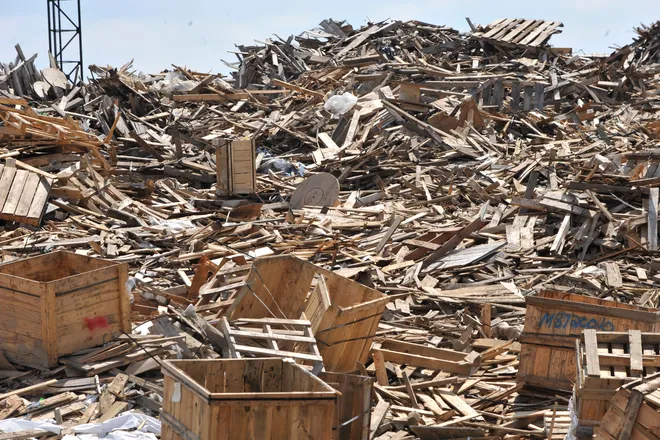
I started scouring Facebook Marketplace for free or almost free pallets. The choices I had were beat-up and unusable or way over-priced. Then I happened on to a company, Chip Energy, that recycles pallet wood for pellets and fireplace logs. They had good prices on solid pallets and the location was only 10 minutes from the house. I made a deal for some pallets and took a couple of trips to bring them back. I would end up making a couple of more trips as the project went along, to buy extra.
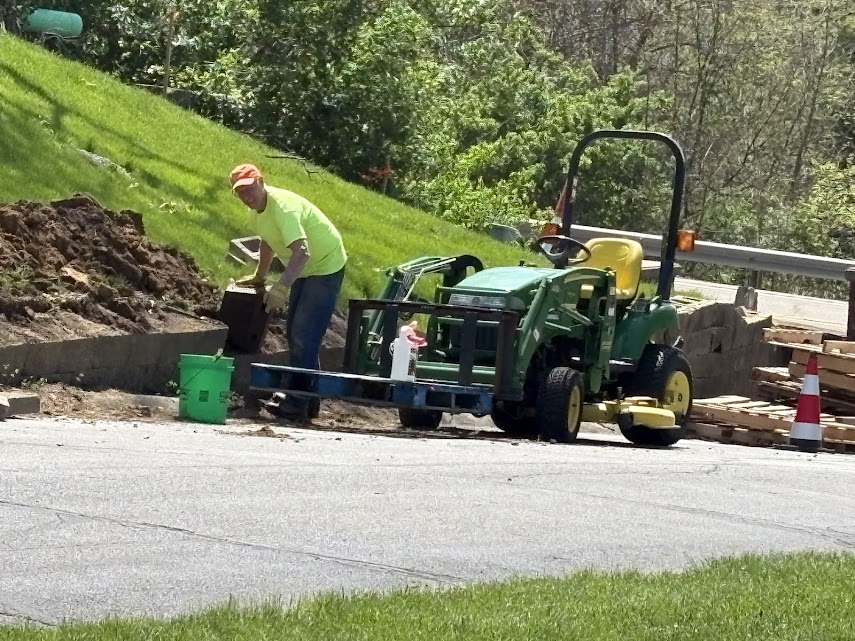
The wall used plastic pins to hold the blocks in place. I tried to salvage as many as I could. Without the pins, there was nothing to hold the blocks to each other, making them unusable as a wall.
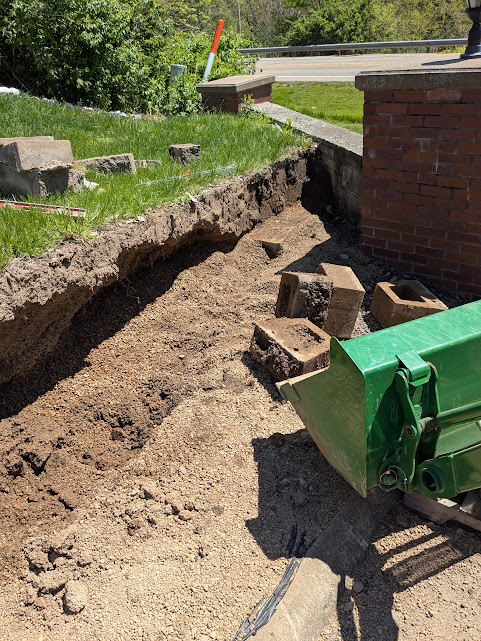
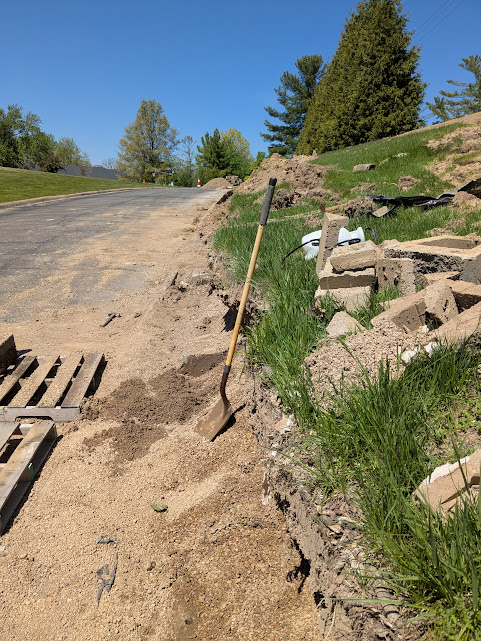
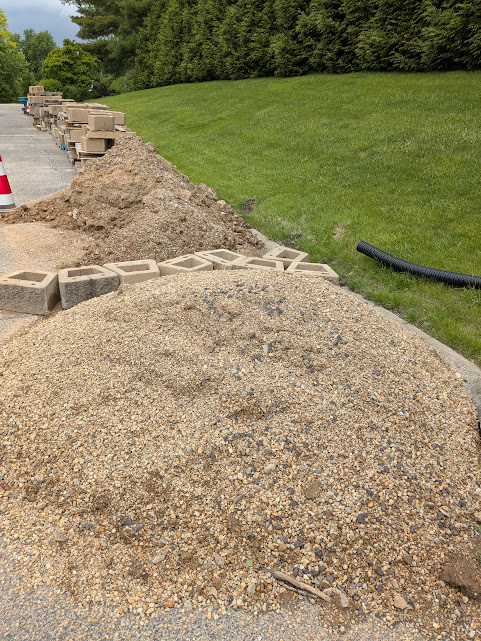
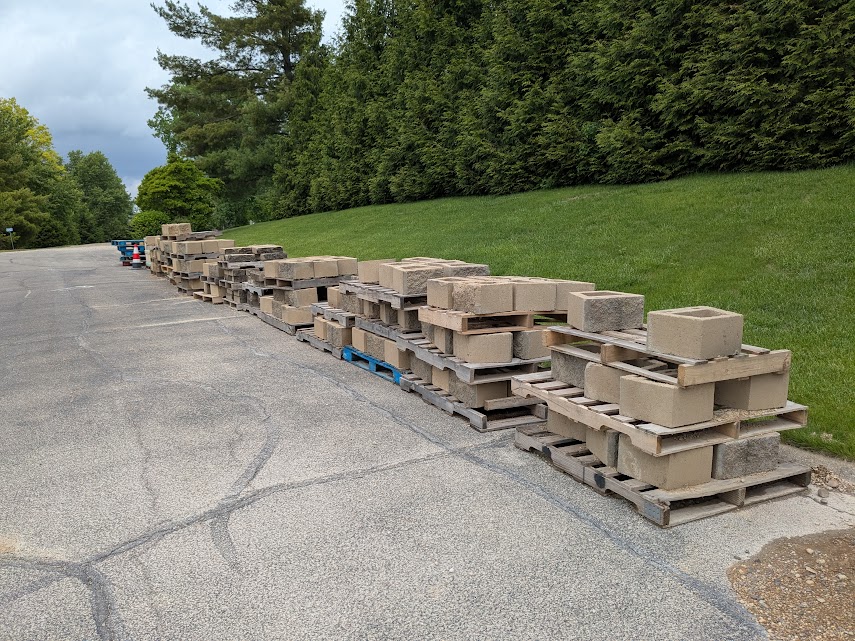
I cleaned out the trench trying to get it at least 12″ deep and 18-24″ wide.
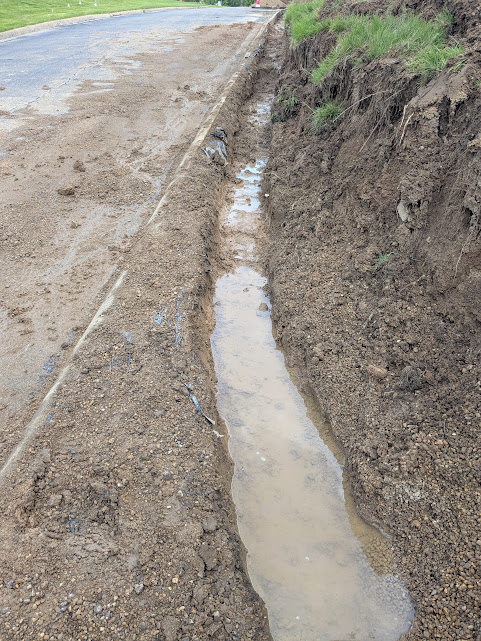
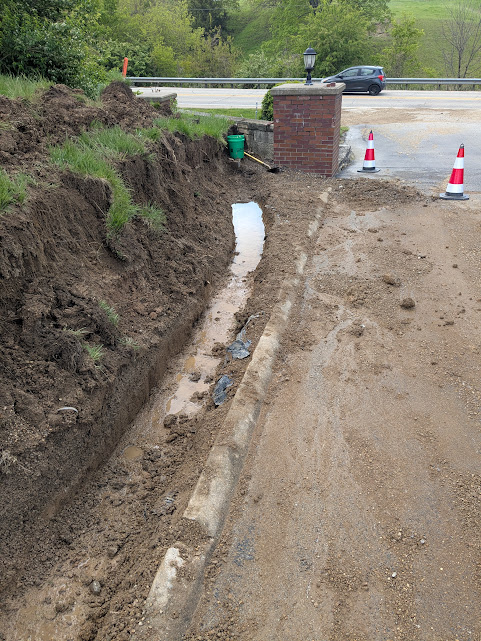
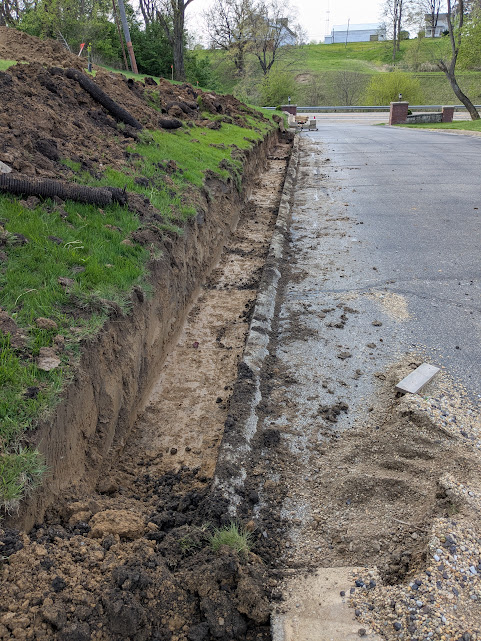
After two days off draining the trench was ready for the next step. Road pack or CA-6. CA-6 is crushed limestone that includes the ‘fines’ that are usually washed out. This type of gravel, when packed, provides footing support that is almost as solid as concrete. I backfilled the trench with about 12 ton of pack, leveled it out and then rented the machine from hell. A Jumping Jack compactor model B550-4.
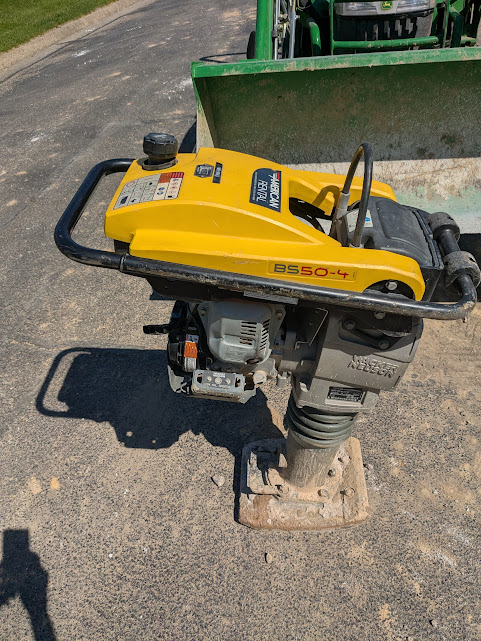
When compacting a base for support, there are a couple of choices; a plate compactor and the aforementioned jumping jack. The plate packer is about 20″ and is much easier to operate but the narrow trench would not allow the plate packer enough contact so I rented Mr. JJ.
Imagine a 250 pound machine literally hopping up and down 600 times a minute. I’d had some experience with these beasts so I sort of knew what to expect. Starting out in the loose pack it was smoother but more difficult to move. And going down hill was pretty easy. Going up the grade was trickier
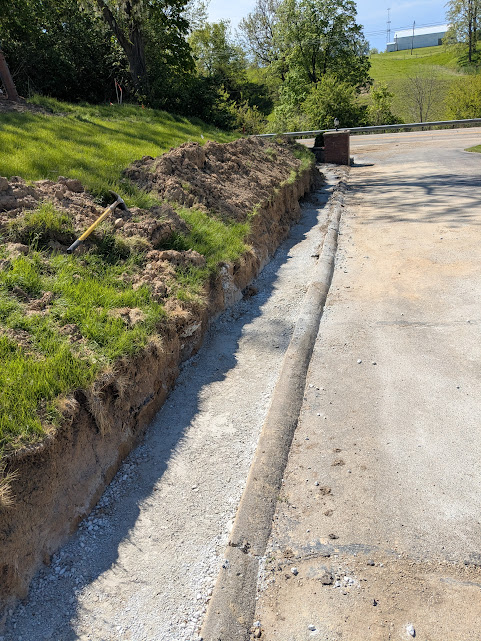
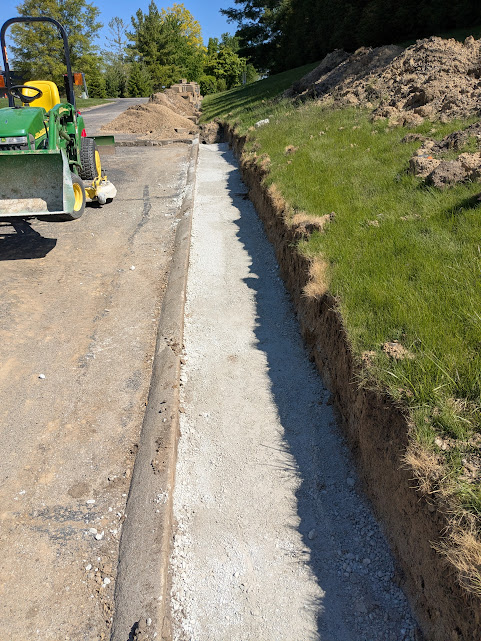
The wall will now have a 6-12″ packed base. That should be enough. It was time to start assembling the new wall.